Short answer: check coolant only when the engine is completely cool, look at the level in the reservoir against its marks, and use the coolant type your owner's manual specifies. A level that keeps dropping, overheating or a sweet smell from the engine bay are reasons to have the cooling system inspected.
What coolant does
Coolant, also called antifreeze, carries heat away from the engine and helps protect against freezing and corrosion. It circulates between the engine and the radiator, so a problem in the cooling system can lead to overheating and engine damage.
Safety first
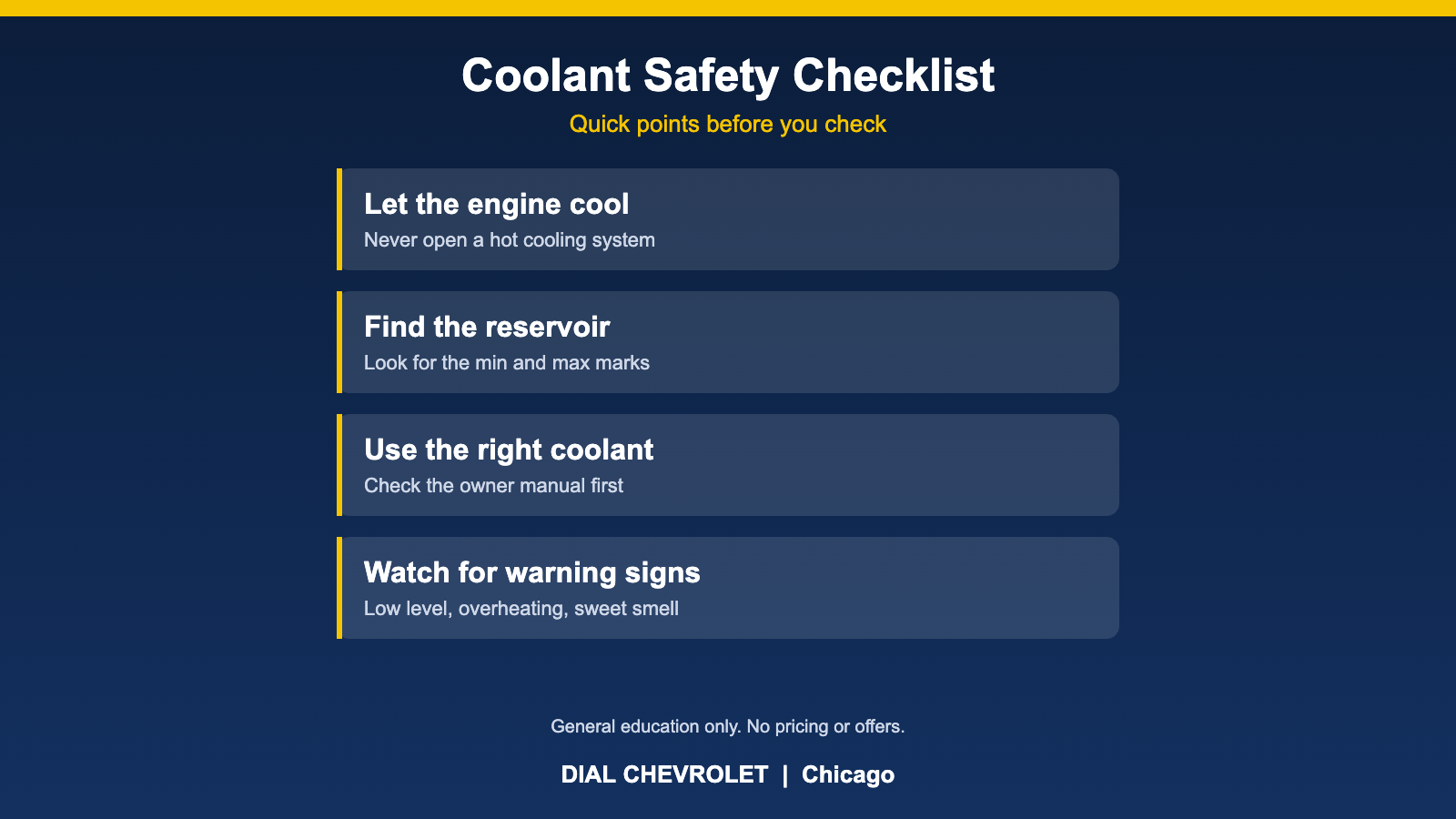
- Never open the radiator or reservoir cap on a hot engine. Hot, pressurized coolant can spray out and cause serious burns.
- Let the engine cool completely before you check the level, and many sources suggest the best time is after the vehicle has sat for a while.
- Do not add coolant to a hot engine.
- Keep coolant away from children and pets, and clean up spills.
How to check the level
- Park on level ground and let the engine cool.
- Open the hood and find the translucent coolant reservoir. It is often marked with a warning not to open when hot.
- Read the level against the minimum and maximum marks. With a cold engine it should sit between them.
- Do not overfill. Extra coolant can simply overflow.
Check your owner's manual for the exact location and marks on your vehicle.
Using the right coolant
Different coolant types do not always mix well, so use the type and mixture your owner's manual calls for. If you are not sure what is in your system, ask a technician before topping it off.
Signs the cooling system needs attention
- The level keeps dropping, which can point to a leak.
- The engine overheats or the temperature warning appears.
- A sweet, syrupy smell from the engine bay.
- Steam from under the hood. Pull over safely and shut the engine off.
- Weak heat from the vents, which can be linked to low coolant.
- Visible leaks, cracked hoses or a worn radiator cap.
When coolant is replaced
A coolant flush drains and replaces the fluid in the cooling system. The timing depends on your vehicle, so follow the maintenance schedule in your owner's manual. See our maintenance schedule guide for how fluid checks fit into regular service.
Before winter and summer
Many guides suggest checking the level before the hottest and coldest months. That fits Chicago well; our winter prep checklist covers other cold-weather checks.
Talk to the Dial Chevrolet Team
If the level is low, the temperature gauge is climbing or you smell coolant, schedule service or contact us. Our check engine light guide may also help if a warning light is on.
Sources
- Kelley Blue Book: Do I Need a Coolant System Flush?
- Cars.com: How to Check Your Car's Engine Coolant
- RepairPal: How to Check Your Car's Coolant System
Published by Dial Chevrolet, 6603 S Western Ave, Chicago. General education only. Follow your owner's manual and have a qualified technician service the cooling system.