Short answer: the most common signs of a wheel alignment problem are a vehicle that pulls to one side, a steering wheel that sits off-center on a straight road, and tires that wear unevenly. A technician can confirm the cause, because other issues can look similar.
What wheel alignment means
Wheel alignment adjusts suspension angles, commonly called camber, caster and toe, so the tires meet the road as the vehicle was designed. When those angles drift, handling can change and tires can wear faster than they should.
Signs you may need an alignment
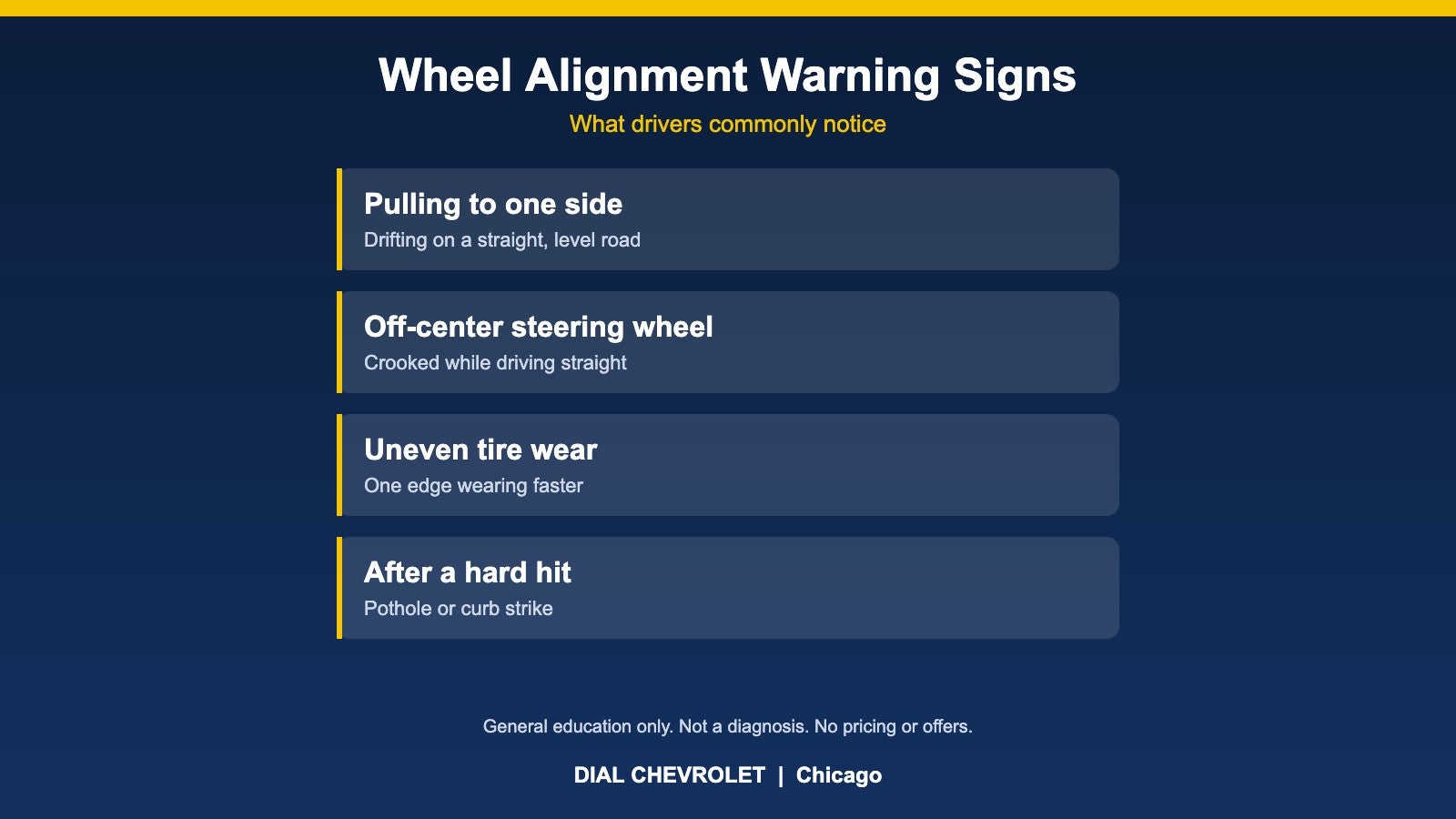
- Pulling: on a straight, level road with little wind, the vehicle drifts left or right and you keep correcting the steering.
- Off-center steering wheel: the wheel is crooked while the vehicle is going straight.
- Uneven tire wear: the inner or outer edge of a tire looks more worn than the rest of the tread.
- Squealing tires: noise during ordinary low-speed turns.
- Steering that feels loose or does not return to center after a turn.
- Vibration: a shaking steering wheel can point to alignment, but it can also come from tire balance or worn parts.
When to have it checked
Many shops suggest an alignment check after a hard pothole or curb hit, after suspension or steering work, and when you install new tires. Chicago streets can be rough after winter, so it is reasonable to pay attention to how the vehicle drives in spring.
Other things that feel like bad alignment
- Uneven tire pressure can make a vehicle pull, so check pressures first.
- A sticking brake caliper can also cause pulling.
- Worn tie rods, ball joints or other steering and suspension parts can cause loose steering and uneven wear; they need to be inspected with the vehicle raised.
- Tire balance problems often show up as vibration instead of pulling.
A simple self-check
Look at each tire's tread across its full width, and compare the front tires to each other. Wear concentrated on one edge is worth having inspected. Do this regularly, and before long trips.
Why it matters
Correct alignment helps tires wear evenly, supports steady handling and can protect fuel economy. Ignoring a problem can shorten tire life.
Talk to the Dial Chevrolet Team
If your vehicle pulls, the steering wheel is crooked or the tires look unevenly worn, you can schedule service or contact us. See also our maintenance schedule guide, brake service warning signs and winter prep checklist.
Sources
- Kelley Blue Book: What Is Wheel Alignment
- AAA: Vehicle Wheel Alignment and Suspension
- Continental Tires: Wheel Alignment
Published by Dial Chevrolet, 6603 S Western Ave, Chicago. General education only. It is not a diagnosis; have a qualified technician inspect your vehicle.