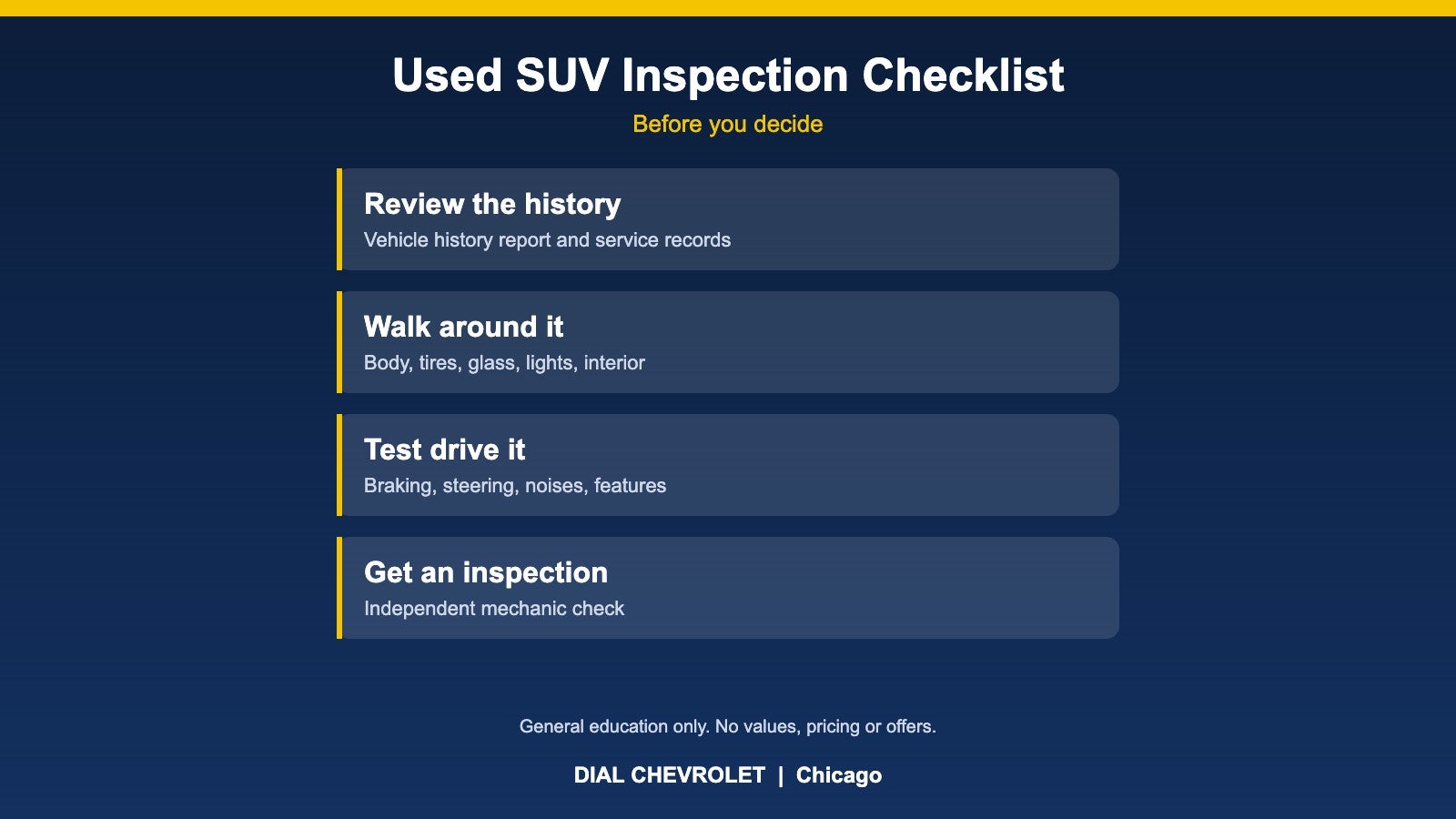
Short answer: before buying a used SUV, review its vehicle history report and service records, inspect it carefully in person, take a thorough test drive, and have an independent mechanic perform a pre-purchase inspection. Each step catches different problems, so it helps to do all of them.
Start With the History
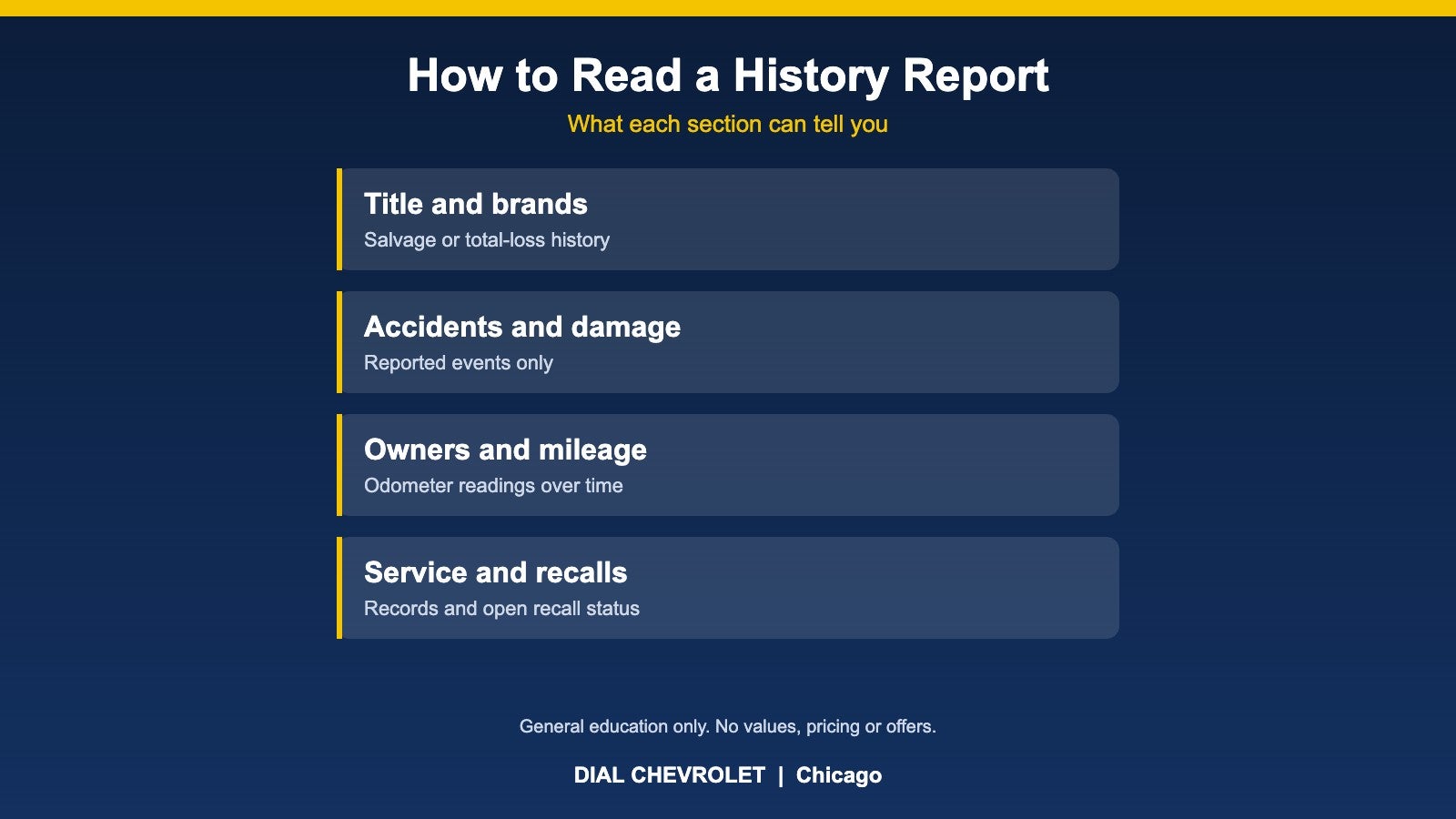
Ask for a vehicle history report, which can show ownership changes, reported accidents, service entries and open recalls. Reports are a useful starting point but are not guaranteed to be complete, so treat them as one input. Service records matter too: be cautious when maintenance is claimed but cannot be documented.
Walk Around the Exterior
- Look for mismatched paint, uneven gaps between panels or signs of past repairs.
- Check tires for even wear and ask how old they are.
- Inspect glass, lights and mirrors for damage.
- In Chicago, look underneath and along the lower body for rust, since road salt is hard on metal. Our road salt corrosion guide explains why.
Check the Interior and Features
- Test every window, lock, seat adjustment, climate control setting and the infotainment system.
- Look for water stains, musty smells or worn areas that do not match the mileage.
- Confirm all warning lights turn on at start-up and go off. A light that stays on needs explaining; see our check engine light guide.
- For a three-row SUV, check that the second and third rows fold and latch properly, and that child-seat anchors work if you need them.
Take a Real Test Drive
Drive on a mix of roads that includes bumps, a highway stretch and some stop-and-go. Listen for unusual noises, feel for pulling or vibration, and test the brakes firmly in a safe place. If you plan to tow, ask about the vehicle's towing equipment and confirm capability for that exact vehicle in its documentation rather than assuming it.
Get a Pre-Purchase Inspection
Automotive guides consistently recommend an independent inspection by a qualified mechanic before you finalize a purchase, because many used vehicles are sold as-is and a technician can spot issues a walk-around may miss. An inspection usually covers the engine, transmission, suspension, brakes and underbody. It will not catch everything, but it improves your odds. Private sellers may be less willing to allow one, which is itself something to weigh.
Compare the Total Picture
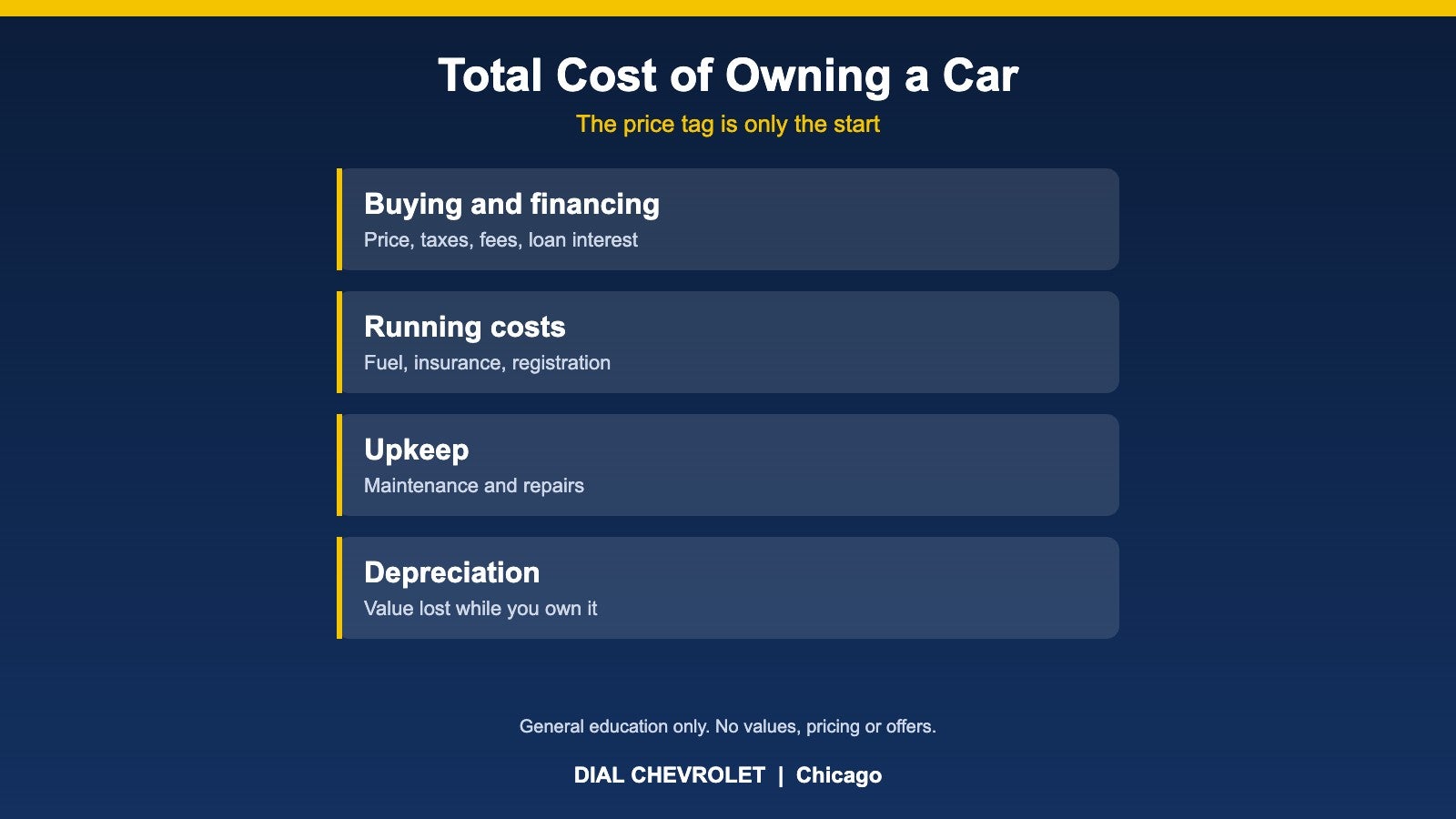
Condition is only part of the decision. Think about ownership costs as well; our total cost of ownership guide and the new vs. used comparison can help.
Talk to the Dial Chevrolet Team
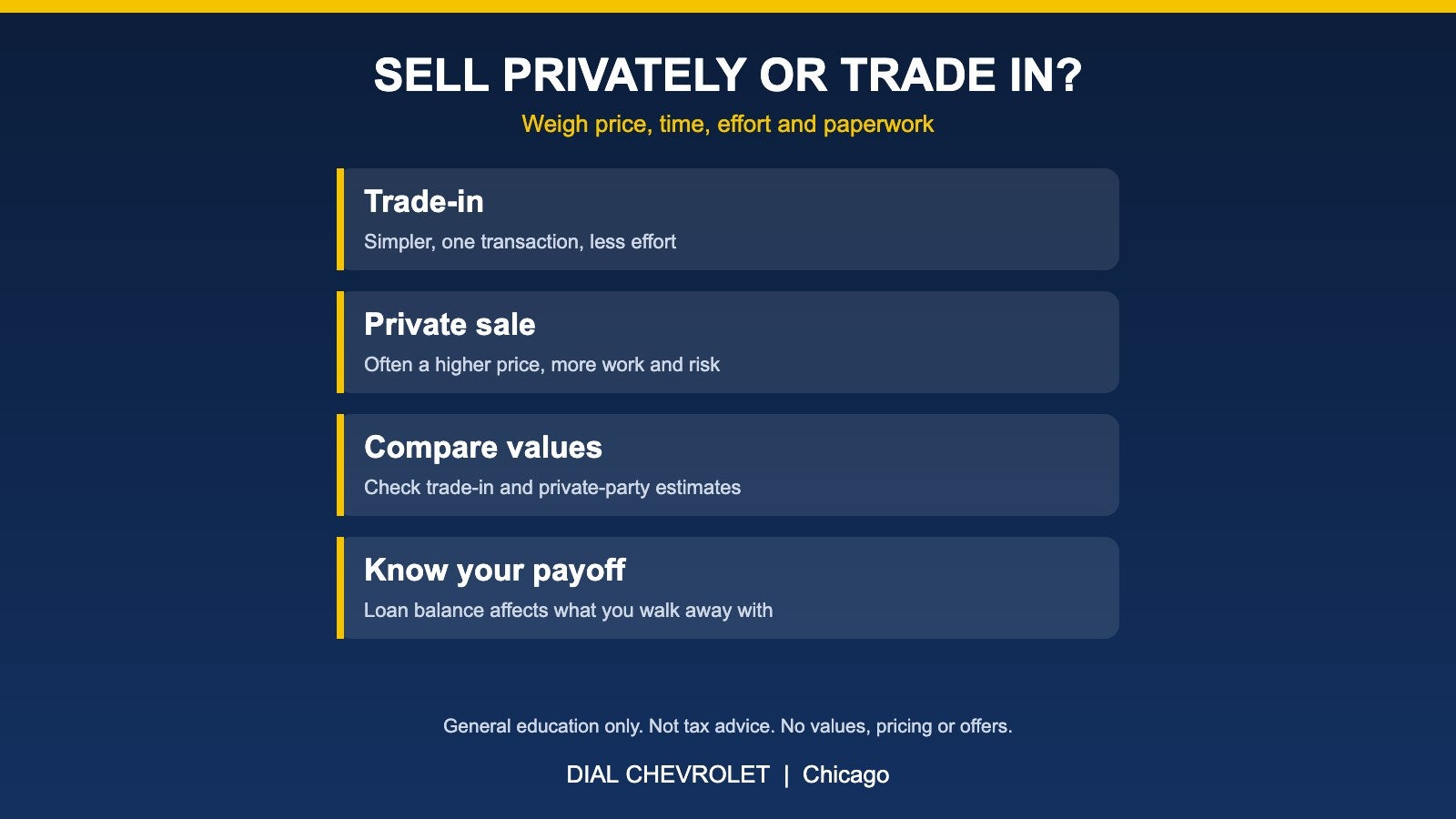
You can browse used inventory, start a trade-in request, or contact us to ask what documentation is available for a specific vehicle.
Sources
- Edmunds: What to look for when buying a used car
- CarGurus: The ultimate used car buying checklist
- RepairPal: Pre-purchase inspection
Published by Dial Chevrolet, 6603 S Western Ave, Chicago. General education only. No vehicle values, pricing, warranty terms or offers are stated.