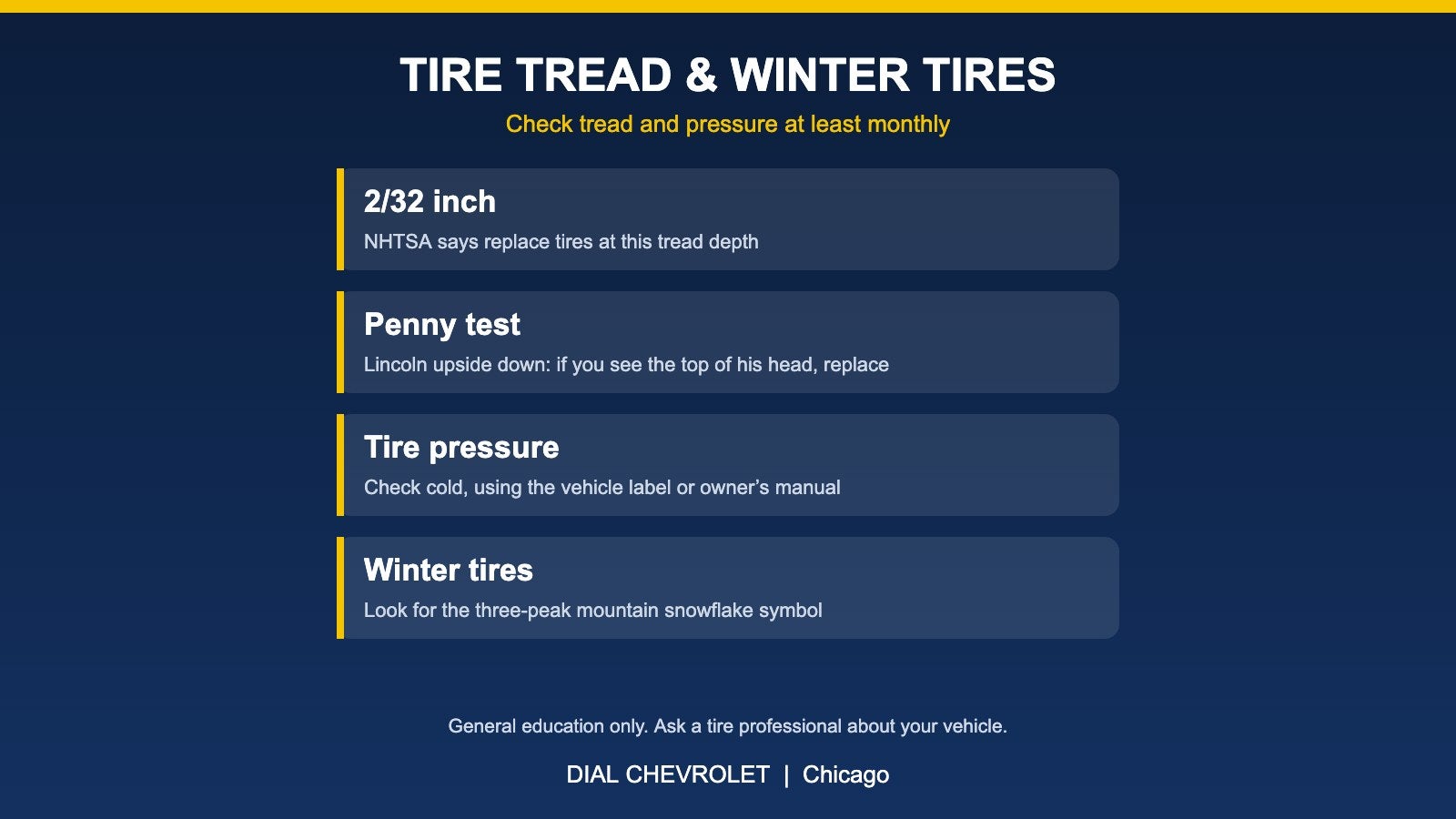
Short answer: NHTSA says tires should be replaced when the tread wears down to 2/32 of an inch, and it recommends checking tread and tire pressure at least monthly. In a Chicago winter, many drivers also ask whether all-season tires are enough or whether winter tires are worth it. Here is how to check what you have and what to ask a tire professional.
How to check tread depth
Your tires' tread is what grips the road, especially when it is wet or icy. NHTSA describes a few simple checks you can do at home:
- Penny test: put a penny into the tread upside down with Lincoln's head facing you. If you can see the top of his head, it is time to replace the tires.
- Treadwear indicators: raised bars sit between the tread grooves. When the tread is worn level with them, the tire needs replacing.
- Tread depth gauge: a low-cost gauge gives you an actual measurement, and a service advisor can measure it for you.
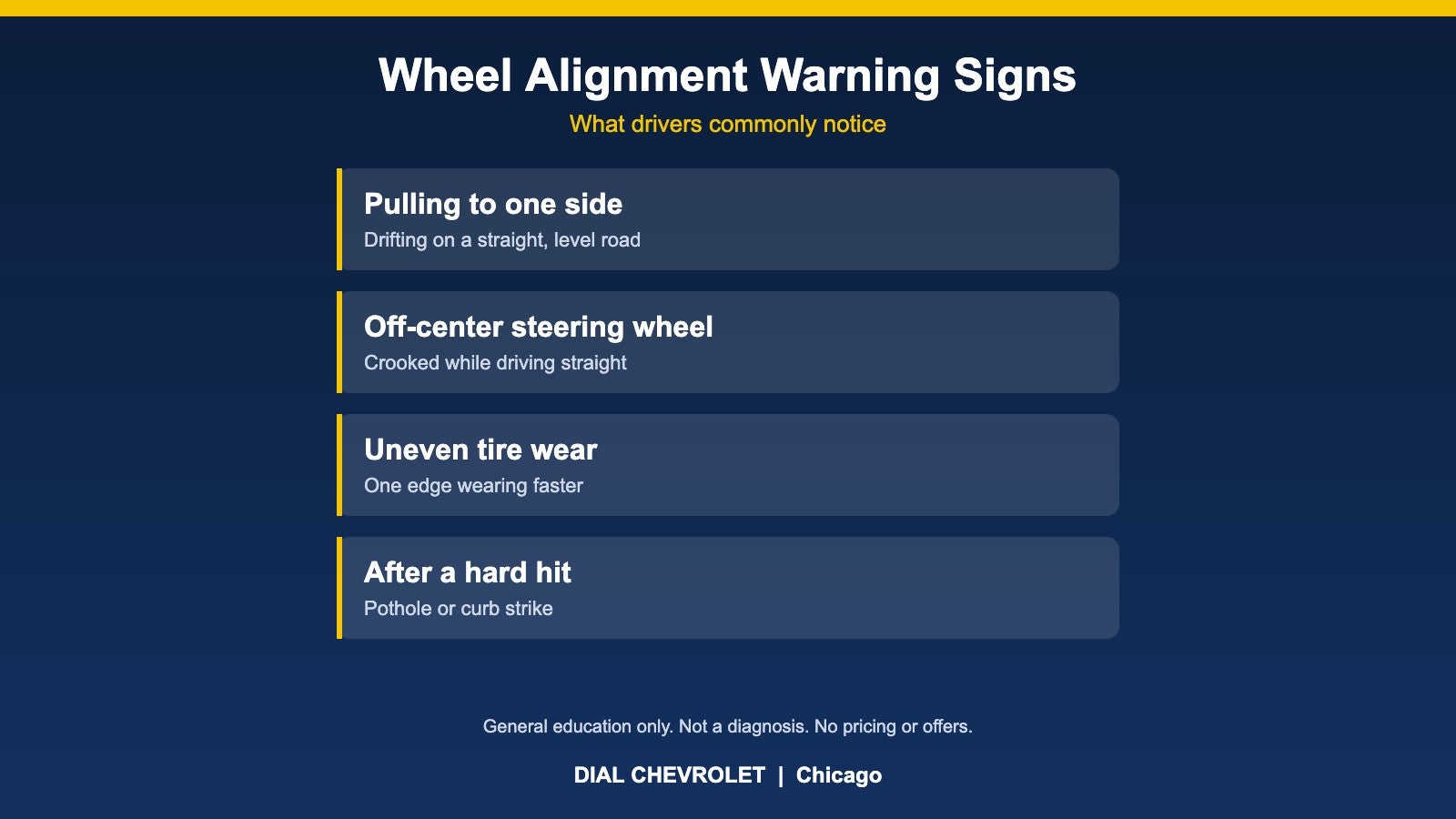
Check several spots across each tire, because tires can wear unevenly. Uneven wear is also a good reason to ask about alignment and rotation. Our guide to how often to rotate Chevy tires covers the rotation side.
Do not stop at 2/32 if winter traction matters
2/32 of an inch is the point where NHTSA says a tire should be replaced. It is a minimum, not a target. Consumer Reports testing has found that all-season tires can lose a noticeable amount of grip on wet, snowy and icy surfaces well before they are worn out, so some drivers choose to replace tires earlier ahead of winter. A tire professional can tell you what makes sense for your vehicle and how you drive.
Check tire pressure monthly
- Check all tires, including the spare, at least once a month when they are cold, meaning the vehicle has not been driven for at least three hours.
- Use the pressure listed by the vehicle manufacturer on the Tire and Loading Information label or in the owner's manual, not the number printed on the tire.
- A tire pressure monitoring system (TPMS) only warns you when a tire is significantly underinflated, so it does not replace a manual check.
Tire age matters too
You cannot judge a tire's age by looking at it. Some manufacturers recommend replacing tires that are six to ten years old regardless of tread wear. The last four digits of the DOT Tire Identification Number on the sidewall show the week and year the tire was made. Age matters most for vehicles that are driven infrequently.
All-season vs. winter tires
NHTSA notes that all-season tires handle a variety of road conditions and have some mud and snow capability, while winter tires perform better than all-season tires in deep snow. The best choice depends on where you live and the weather you usually drive in. Winter tires that pass a winter traction test carry a symbol of a mountain with a snowflake on the sidewall. If you are unsure, ask a tire professional about your driving habits, your vehicle and how much winter driving you do. Our Chicago winter prep checklist has more ideas for getting a vehicle ready for the season.
Talk to the Dial Chevrolet Team
If you would like your tires looked over, you can schedule service with the Dial Chevrolet service team. See the Chevy maintenance schedule guide for other routine checks, contact the dealership with questions, or browse new inventory.
Sources
Published by Dial Chevrolet, 6603 S Western Ave, Chicago. This article is general education only and does not include pricing or offers. Tire needs vary by vehicle and driving, so ask a tire professional or your service advisor about your own tires.