Blog / Silverado Trucks

Blog

All Silverado Trucks Service and Maintenance Used and Trade-Ins Suburban and SUVs
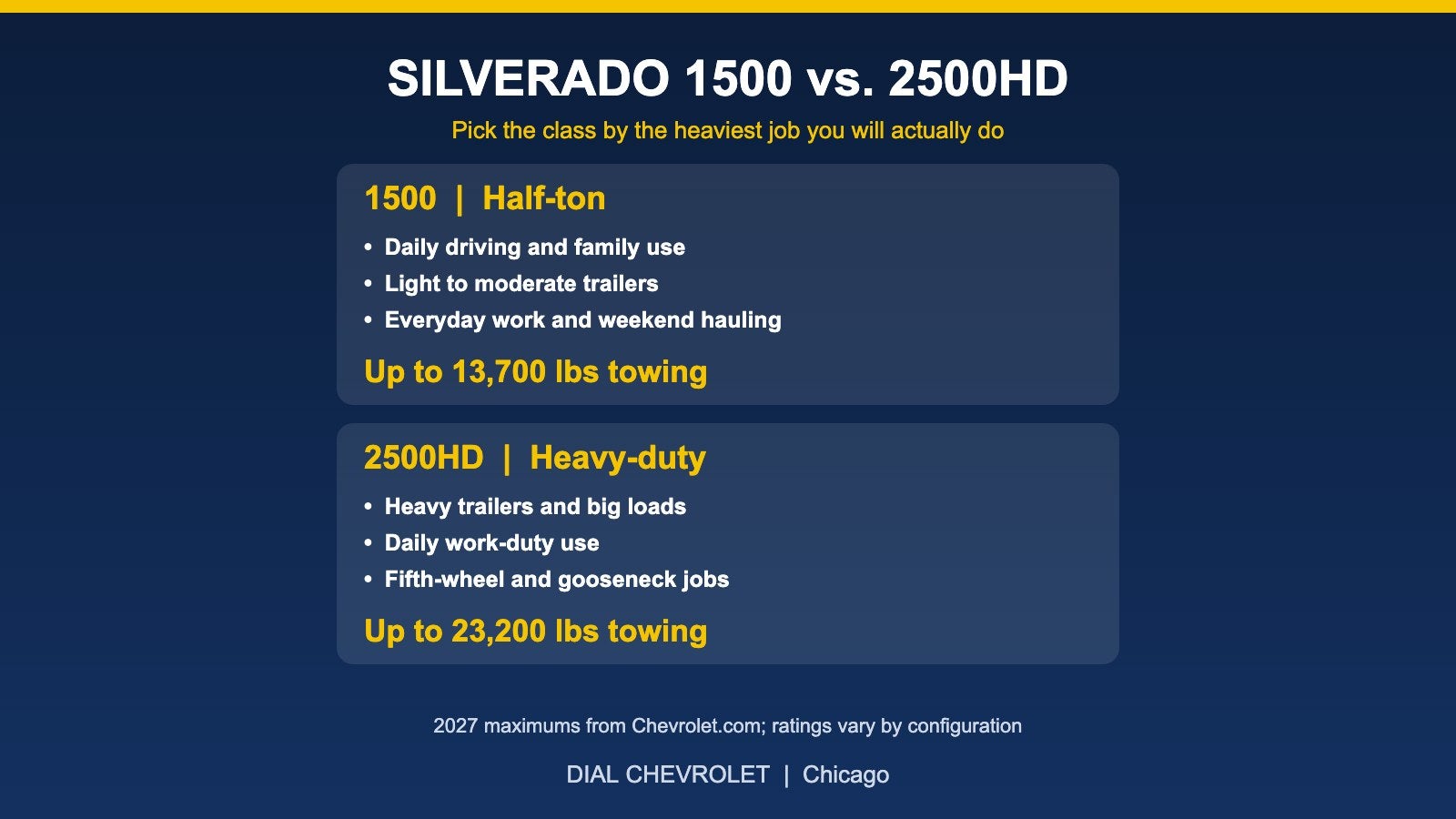
Comparison of the Silverado 1500 half-ton and 2500HD heavy-duty classes with 2027 maximum towing figures from Chevrolet.com

Silverado 1500 vs. 2500HD: Which Truck Do You Actually Need?

Short answer: choose the Silverado 1500 if the heaviest thing you regularly do is daily driving, family trips, a boat or a moderate trailer, and consider the Silverado 2500HD if you regularly pull heavy trailers, haul heavy loads for work, or use fifth-wheel or gooseneck hitches. The right answer comes from the heaviest job you will actually do with the truck, not from the biggest number on a brochure. This guide explains the difference between the two classes, what Chevrolet has published for the 2027 model year, and how to decide. What “Half-Ton” and “Heavy-Duty” Mean The Silverado 1500 is Chevrolet’s half-ton full-size pickup. The Silverado 2500HD is a heavy-duty truck built for bigger towing and hauling work, and the Silverado 3500HD sits above it. Heavy-duty trucks are designed around work, so they come with different engines, axles, frames and suspension. Names like “half-ton” no longer describe exact payload, so treat them as class labels rather than numbers. What Chevrolet Has Published for 2027 Silverado 1500: Chevrolet lists a maximum towing figure of 13,700 pounds tied to the available 5.7L V8, and a maximum payload figure of 2,340 pounds tied to the TurboMax engine. These are two different engines, so no single 1500 achieves both maximums at once. Silverado 2500HD: Chevrolet states that it offers up to 23,200 pounds of towing, and that the 3500HD offers up to 38,000 pounds. Chevrolet notes that actual capacity varies by model, configuration, powertrain and equipment. HD powertrains: the 2027 Silverado HD is offered with a 6.6L gas V8 and an available Duramax 8.3L Turbo-Diesel V8. Treat these as upper limits for specific builds, not as what every truck can do. Our guide to 2027 Silverado 1500 towing and payload by engine explains how to read the 1500 numbers. When the 1500 Is the Better Fit You use the truck as a daily driver, a family vehicle or a commuter. Your trailer is a boat, a utility trailer, a camper or equipment in the light-to-moderate range. You want easier parking, a more car-like ride and a smaller turning circle in the city. Your heaviest regular load fits comfortably within the payload on the truck’s door-jamb label. When the 2500HD Is Worth Considering You tow heavy trailers often, not just once or twice a year. You carry heavy bed loads such as a slide-in camper, equipment or tools. You need a fifth-wheel or gooseneck hitch. You use the truck for work every day and want a platform designed for that duty. Trade-Offs to Weigh Honestly Size. Heavy-duty trucks are larger, which matters in Chicago garages, alleys and tight street parking. Ride. A heavy-duty truck is built for load, and it can ride firmer when it is empty. Fuel and running costs. Larger engines, tires and parts can change what the truck costs to run and maintain. Everyday comfort. If you only tow heavy a few times a year, a properly equipped 1500 may be enough, and renting or hiring for the rare big job may be a better fit than owning more truck than you need. A Simple Way to Decide Write down the heaviest trailer you will tow and how often. Write down the heaviest load you will carry in the bed and cab, including passengers and gear. Check the ratings for the exact configuration you are considering on the truck’s label, not only in an ad. Our payload guide shows where to find them. Leave a safety margin rather than loading to the limit. Test drive both on roads you actually use. If you are also weighing a Silverado against another brand, see our guide to comparing the Silverado 1500 and Ford F-150 fairly. Talk to the Dial Chevrolet Team If you are not sure which class fits your work, you can contact the Dial Chevrolet team, browse new Chevrolet inventory, browse used vehicles, or get a trade-in estimate. For service, you can schedule an appointment online. Sources Chevrolet Silverado 1500 on Chevrolet.com Chevrolet Silverado HD on Chevrolet.com Published by Dial Chevrolet, 6603 S Western Ave, Chicago, IL. Figures are manufacturer-published maximums for the 2027 model year at the time of writing and depend on configuration; production models and availability may vary. Always confirm ratings for the exact vehicle you are considering.
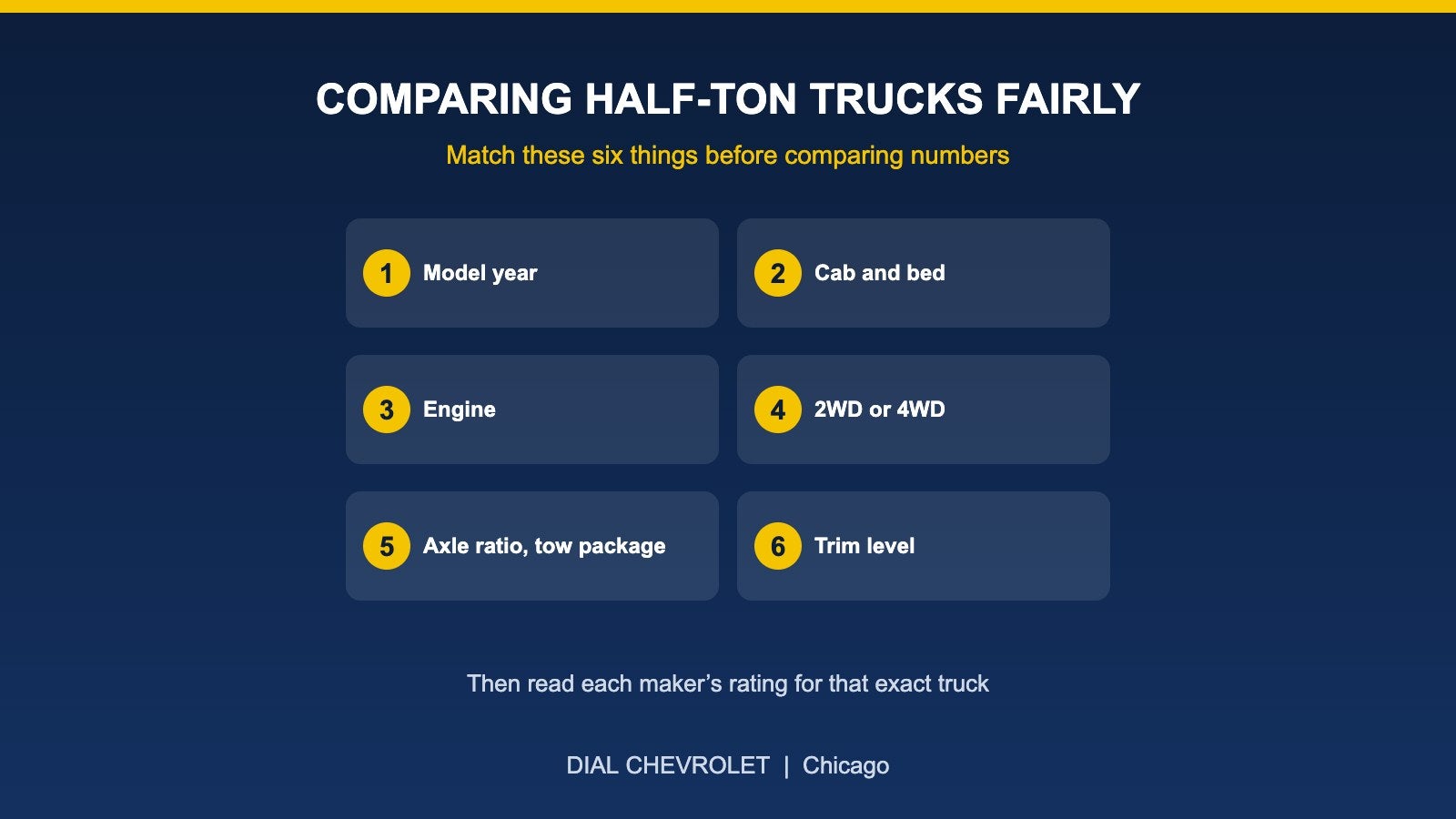
Six-item checklist for comparing half-ton trucks fairly: model year, cab and bed, engine, drivetrain, axle ratio and tow package, trim

Silverado 1500 vs. Ford F-150: How to Compare Them Fairly

Short answer: the Chevrolet Silverado 1500 and the Ford F-150 are both capable full-size pickups, and the fair way to compare them is to line up the same model year, cab, bed, engine, drivetrain and tow package before you look at any towing or payload number. A headline figure for one truck is almost never the figure for the truck you would actually buy. This guide explains what to match, what to read from each manufacturer, and what to check in person. We are a Chevrolet dealership, so we will say plainly where you should confirm Ford’s details with Ford. 1. Start With the Model Year Model year matters more than usual right now. Chevrolet has announced a redesigned 2027 Silverado with new engine choices, while the F-150 is carried into 2027 without a full redesign. Comparing a 2027 Silverado to a 2025 or 2026 F-150, or the reverse, means you are comparing two different generations of engineering. Decide which model year you are shopping, then compare trucks from that same year. If you are weighing a new 2027 against a 2026 truck, treat that as a separate question about timing and available inventory. 2. Match the Cab and Bed Both brands sell regular, extended and four-door crew cab body styles, with several bed lengths. Cab and bed change payload, towing, turning radius and parking. A crew cab with a short bed is a different truck from a regular cab with a long bed, even inside the same model line. Pick the cab and bed you need, then compare only trucks built that way. 3. Match the Engine Each brand offers a range of engines, and Ford also offers hybrid powertrains in the F-150. Rather than comparing engine names, compare what you will use the truck for: daily commuting, trailer towing, work loads or a mix. Compare fuel economy figures from the EPA estimates for each exact configuration, and remember that your real-world numbers will change with load, weather and driving style. 4. Match 2WD and 4WD Four-wheel drive adds weight and can change both payload and tow ratings. For Chicago winters many buyers want 4WD, so compare 4WD trucks against 4WD trucks. 5. Read Tow and Payload Ratings for the Exact Configuration Maximum ratings are tied to specific builds. Each maker’s top towing number usually requires a particular engine, axle, cab, bed and tow package together. Payload is set by the individual truck. The yellow label on the driver’s door frame shows the real payload for that vehicle, and it drops as you add passengers, gear and accessories. Use each manufacturer’s own towing guide. Do not mix numbers from a Chevrolet page with numbers from a Ford ad. Use Chevrolet’s published ratings for the Silverado and Ford’s published ratings for the F-150, both for the same type of build. Our guides on how payload works and 2027 Silverado towing and payload by engine explain how to read these numbers. 6. Compare Trim Levels, Not Just Trucks Both brands run a ladder from basic work trims to luxury trims, plus off-road versions. Compare a work-oriented trim with a work-oriented trim and a premium trim with a premium trim. Trim names do not line up one-to-one between brands, so compare the features you actually want: seating, driver-assistance features, towing technology, bed features and cabin materials. What to Check In Person Visibility from the driver’s seat and how the mirrors work when towing Ease of getting in and out, and how the rear seat feels in a crew cab Infotainment and phone connection, using your own phone Bed access, tailgate features and tie-down locations How the truck feels on a rough city street, not just a smooth road Whether the truck fits your garage or parking spot A Fair Way to Decide Choose the model year, cab, bed and drivetrain you need. Write down the heaviest trailer and the heaviest load you will realistically carry. Find each manufacturer’s rating for that exact configuration. Drive both trucks back to back on the same route. Compare ownership factors such as warranty coverage, maintenance and service access. See a Silverado in Person If you want to see how a Silverado 1500 compares to the truck you are considering, you can browse new Chevrolet inventory, browse used vehicles, get a trade-in estimate, or contact the Dial Chevrolet team to arrange a test drive. If you plan to haul or tow, our service team can help keep your truck ready: schedule service. Sources Chevrolet Silverado 1500 on Chevrolet.com Edmunds: 2027 Silverado, F-150 and Tundra half-ton comparison Published by Dial Chevrolet, 6603 S Western Ave, Chicago, IL. This is general educational guidance, not a claim that one truck is better for every buyer. Specifications and availability vary by model year and configuration; confirm details with each manufacturer. Ford and F-150 are trademarks of Ford Motor Company.

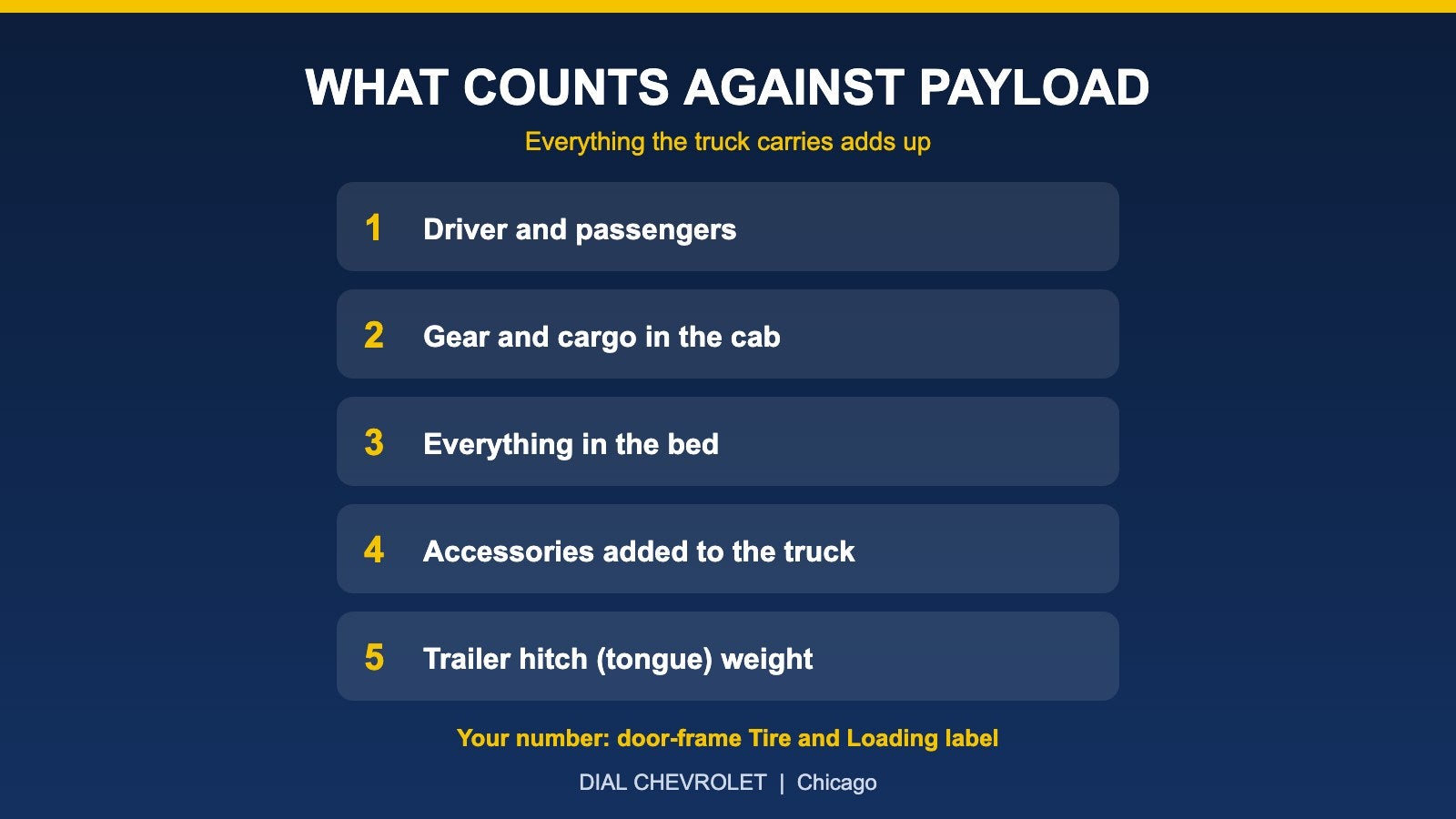
List of five things that count against a Silverado's payload, from passengers to trailer tongue weight

Silverado Payload Explained: How to Find Your Truck's Real Number

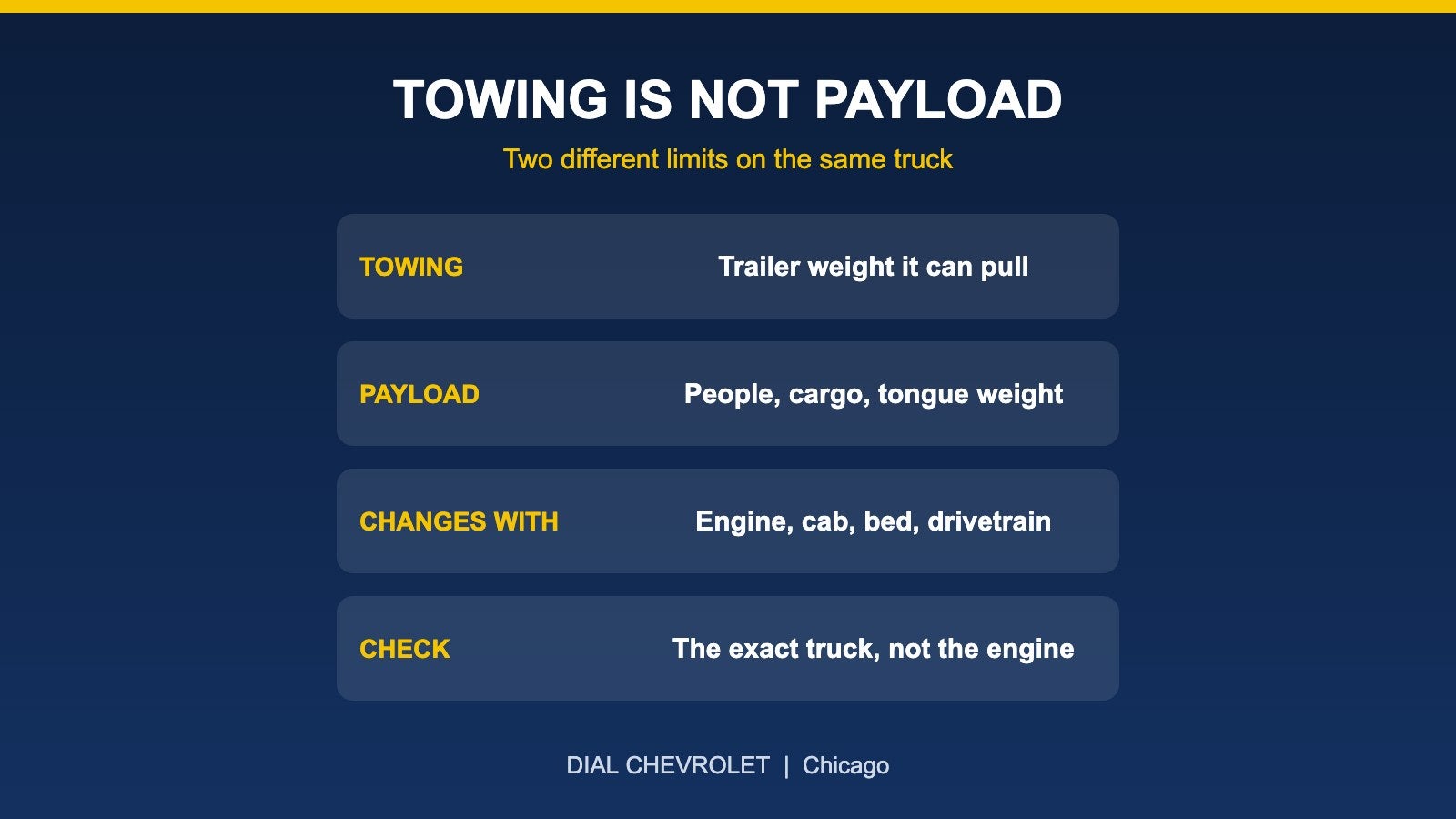
Short answer: payload is the total weight your Silverado can carry in the cab and bed, and the number that applies to your truck is printed on the truck itself, not in an ad. Every cab, bed, engine, drivetrain and option package changes it, so the headline maximum you see online almost never matches the exact truck in your driveway. This guide explains what payload really includes, where to find your own number, and how to avoid the most common mistake, which is forgetting how much weight a trailer puts on the hitch. What Payload Means Payload is the maximum weight a truck is designed to carry. It includes every passenger, every piece of gear in the cab, everything in the bed, and the downward weight of a trailer on the hitch. In simple terms, it is the gross vehicle weight rating (GVWR) minus the weight of the empty truck. Because options and accessories make the empty truck heavier, adding them lowers the payload you have left. Payload Is Not the Same as Towing Capacity Towing capacity is how much trailer the truck can pull. Payload is how much weight the truck can carry on its own frame. A truck can have a high towing number and a modest payload, or the reverse. If you are new to the difference, our guide to 2027 Silverado 1500 towing and payload by engine walks through how GM publishes both numbers. Where To Find Your Truck’s Real Payload The driver’s door frame label. Look for the Tire and Loading Information label. It states the combined weight of occupants and cargo that the vehicle should not exceed. The owner’s manual. The loading and trailering sections explain weight ratings and how to calculate what you can carry. Your Chevrolet dealer. Ask about the specific truck, including cab, bed length, drivetrain, engine and installed options. Why The Maximum Payload In An Ad Is Not Your Number Chevrolet publishes a maximum payload for each engine, but each maximum belongs to one specific configuration. A regular cab with a standard bed and two-wheel drive is lighter than a crew cab with four-wheel drive, so it can carry more. Add a bed cover, running boards, a tool box or a heavier trim package and the available payload goes down. The only reliable figure is the one for the exact truck you plan to buy. What Counts Against Your Payload The driver and every passenger Cargo in the cab, including toolboxes, coolers and gear Everything in the bed, including bed covers, liners and equipment Hitch (tongue) weight from a trailer Aftermarket accessories added to the truck The Hitch Weight Mistake When you tow, part of the trailer’s weight rests on the hitch and counts against payload. A common rule of thumb is that conventional trailer tongue weight is roughly 10 to 15 percent of the trailer’s weight, but your trailer’s manufacturer is the right source for the actual figure. That means a trailer that is within your towing rating can still push a loaded truck past its payload if you also have passengers and gear on board. A Simple Worked Example This example uses made-up numbers, not a Silverado rating. Imagine a door label says the truck can carry 1,500 pounds. Two adults weigh 350 pounds together, gear in the bed weighs 400 pounds, and the trailer puts 600 pounds on the hitch. That totals 1,350 pounds, which leaves 150 pounds of margin. Add two more passengers and the truck is over its limit even though the trailer itself may be well within the towing rating. Payload Checklist Before You Load Up Find the weight limit on your truck’s door-frame label. Add up passengers, cargo, accessories and hitch weight. Compare the total to the label figure, and leave some margin. Redistribute or reduce the load if you are close to the limit. If you tow often, ask about a configuration with more payload or a heavy-duty Silverado. Choosing A Truck Around Payload If you carry heavy loads regularly, such as tools, materials or a camper, start with payload and not horsepower. Tell the dealership what you carry and what you tow, then compare the label figures on the exact trucks you are considering. You can browse new Chevrolet Silverado inventory or pre-owned trucks, ask about a trade-in for your current vehicle, or contact the Dial Chevrolet team with your questions. Sources Chevrolet.com Silverado 1500 Your vehicle’s owner’s manual and door-frame Tire and Loading Information label Published by Dial Chevrolet, 6603 S Western Ave, Chicago, IL. Ratings vary by configuration; always confirm figures for the exact vehicle.

Diagram explaining that towing capacity and payload are two different limits on the same Silverado

2027 Chevy Silverado 1500 Towing and Payload by Engine: What the Numbers Mean

Short answer: there is no single towing or payload number for the 2027 Chevrolet Silverado 1500. General Motors publishes a maximum for each of the four engines, and every maximum belongs to one specific cab, bed, drivetrain and equipment combination. The truck you are looking at may be rated well below the headline figure. 2027 Silverado 1500 engines: maximum towing and payload These are the figures GM published for the next-generation Silverado 1500. Each one applies only to the configuration shown in the last column. Enhanced TurboMax 2.7L Horsepower: 350 Torque: 455 lb-ft Max towing: 9,400 lbs (Regular Cab Long Bed, 2WD) Max payload: 2,340 lbs (Regular Cab Standard Bed, 2WD) Duramax 3.0L Turbo-Diesel Horsepower: 305 Torque: 495 lb-ft Max towing: 12,000 lbs (Crew Cab Short Bed, 4WD, Max Trailering Package) Max payload: 1,870 lbs (Crew Cab Short Bed, 2WD) 5.7L V8 (L76) Horsepower: 402 Torque: 428 lb-ft Max towing: 13,700 lbs (Double Cab Standard Bed, 2WD, Max Trailering Package) Max payload: 2,170 lbs (Regular Cab Long Bed, 2WD) 6.6L V8 (L78) Horsepower: 481 Torque: 501 lb-ft Max towing: 9,700 lbs (Crew Cab Short or Standard Bed, 4WD) Max payload: 1,510 lbs (Crew Cab Short Bed ZR2, 4WD) GM notes that towing ratings are for comparison only and that real-world capacity depends on passengers, cargo and options. What the table tells you The most powerful engine is not the best tow engine The 6.6L V8 makes the most horsepower and torque of the four, but its published maximum towing figure (9,700 lbs) is well below the 5.7L V8 (13,700 lbs). The 6.6L maximum payload (1,510 lbs) is also the lowest, and that figure is for a ZR2. If your priority is pulling a heavy trailer, compare the rating for the exact truck, not the engine's horsepower. Payload and towing are different limits Payload is what the truck can carry in the cab and bed, including passengers, gear and the downward weight a trailer puts on the hitch. Towing capacity is the trailer weight the truck can pull. A truck can have a strong towing number and a modest payload, or the reverse. Load the bed and cab with people and equipment and you reduce what is left for hitch weight. Cab, bed and drivetrain change the number Two of the four headline towing figures above are for two-wheel-drive trucks. Four-wheel drive adds traction for Chicago winters, but it can change the rating, so check the specific truck rather than assuming the maximum applies. The 2027 trim lineup Chevrolet offers the 2027 Silverado 1500 in seven trims: Work Truck, Custom, Silverado (the trim formerly called LT), Custom Trail Boss, Trail Boss, High Country and ZR2. All trims come with a 16.3-inch center touchscreen and a 12.2-inch driver display, according to GM. Super Cruise with trailering support is standard on High Country and ZR2 and available on Silverado and Trail Boss, and it requires an active Super Cruise plan. How to find the real rating for the truck you want Ask for the exact cab, bed length, drivetrain, engine and whether the Max Trailering Package is installed. Check the trailering section of the owner's manual and the tire and loading information label on the driver's door frame for that truck. Weigh your real trailer loaded, not its empty weight, and remember to account for hitch weight and passengers against payload. If you tow often or near the limit, ask about a step up in configuration or a heavy-duty Silverado instead of stretching a half-ton. Timing: 2026 trucks now, 2027 coming GM says the next-generation 2027 Silverado 1500 is expected to go on sale at the end of this year. Until then, current inventory is 2026 model-year trucks, whose ratings differ from the 2027 figures above. Inventory changes daily, so confirm the model year and configuration of any truck before you plan around a number. Next steps Browse new Chevrolet inventory at Dial Chevrolet and compare configurations, check used trucks, or value your trade. Questions about which Silverado fits what you tow? Contact our team and tell us the trailer and the load. Sources: GM, Next-Generation 2027 Silverado 1500 announcement (updated Oct. 2, 2026); Chevrolet.com, 2027 Silverado 1500. Specifications are manufacturer-published and subject to change. Reviewed Nov. 21, 2026. Vehicle prices and offers are not included in this article.

Contact Us

Fill out this form below and we'll contact you shortly
*Required Fields