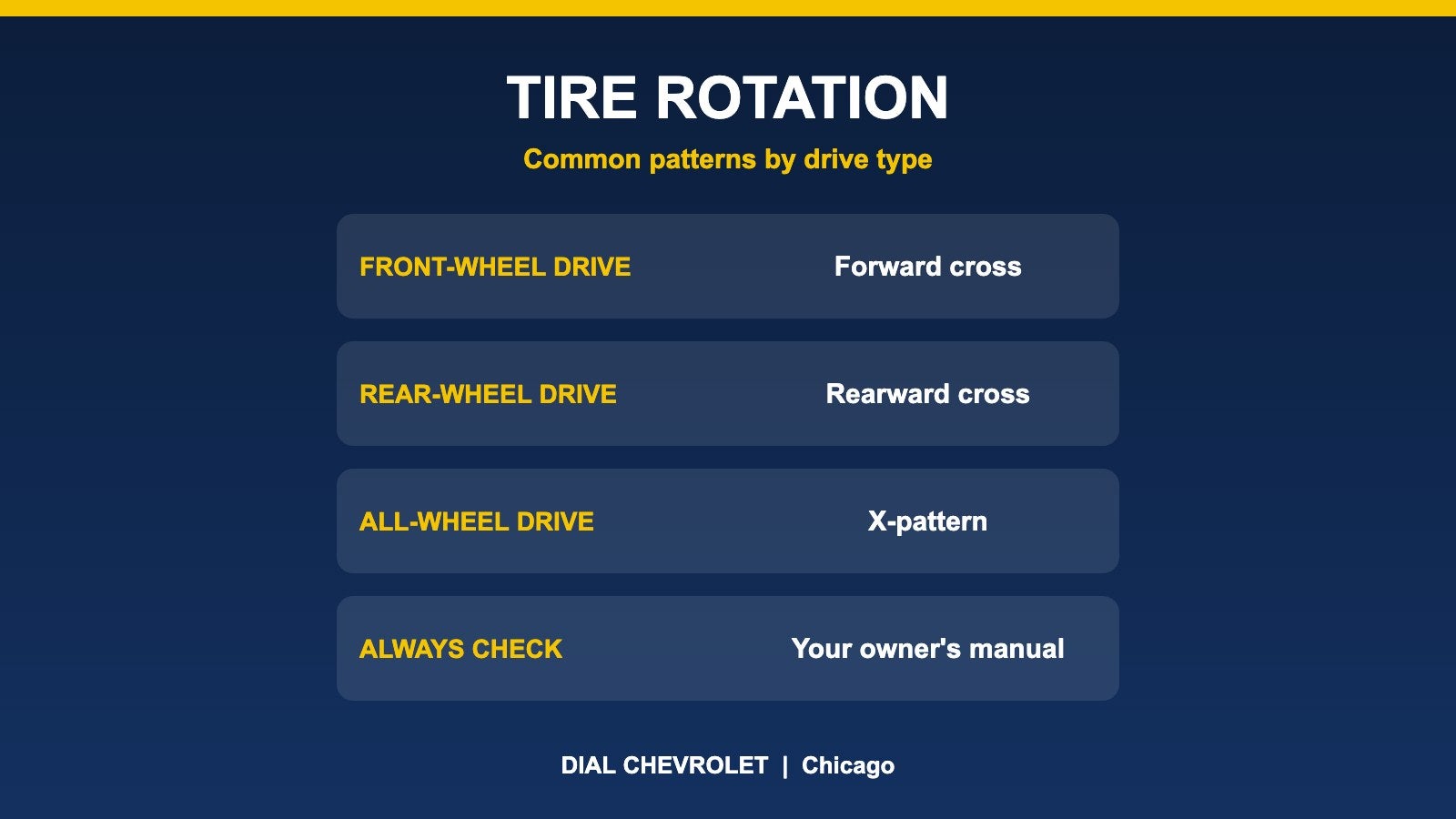
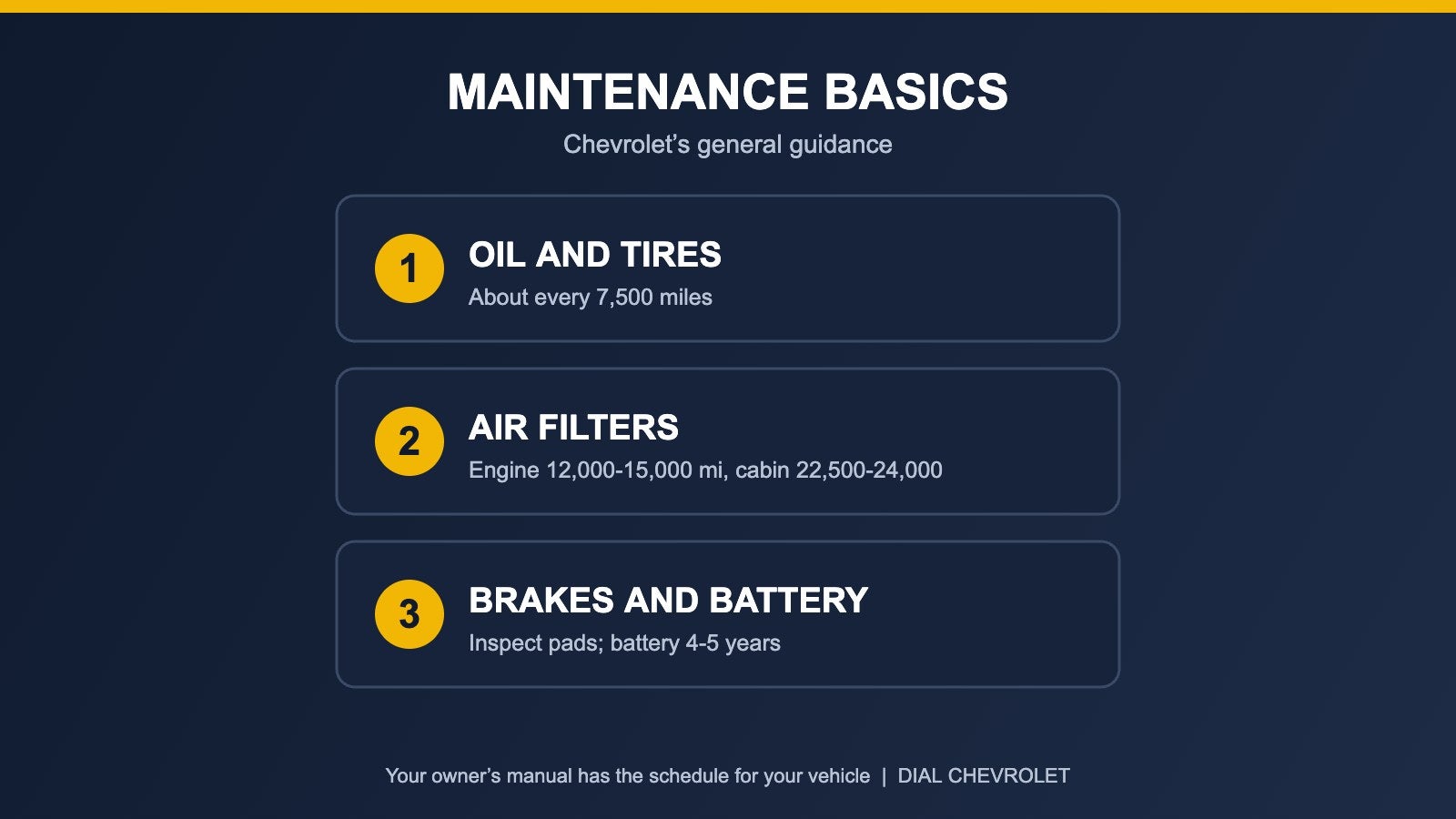
Short answer: Chevrolet’s general maintenance guidance is to rotate tires every 7,500 miles, and NHTSA says that if your manufacturer recommends rotation, a range of 5,000 to 8,000 miles is typical, or sooner if uneven wear appears. The right pattern depends on whether your vehicle is front-wheel, rear-wheel, all-wheel or four-wheel drive, and your owner’s manual has the final word. This guide is general education and lists no prices or offers. Why tires get rotated Tires on different corners of a vehicle wear at different rates. Front tires handle most of the steering and braking, and on a front-wheel-drive vehicle they also deliver the power, while driven rear tires wear in their own way on rear-wheel-drive models. Rotating moves each tire to a new position so wear evens out over time. Chevrolet notes that regular rotation helps extend tire life, and AAA describes the same goal of even wear and steady performance. How often to rotate Chevrolet general guidance: every 7,500 miles. Its general maintenance page says the detailed schedule for your specific vehicle is in the owner’s manual. NHTSA: if recommended by the vehicle manufacturer, every 5,000 to 8,000 miles, or sooner if uneven wear appears. Easy habit: many drivers pair a rotation with an oil change visit. See our oil change guide and the Chevrolet maintenance schedule guide for how the services fit together. Common rotation patterns AAA describes these common patterns, which technicians choose based on drive type and tire type: Forward cross (front-wheel drive): the front tires move straight back on the same side, and the rear tires move forward and cross to opposite sides. Rearward cross (rear-wheel drive and four-wheel drive): the rear tires move straight forward on the same side, and the front tires move back and cross to opposite sides. X-pattern (all-wheel drive): every tire moves diagonally to the opposite axle and the opposite side. Sources describe these patterns a little differently, and some tires cannot be crossed side to side, so treat this list as a general guide and follow what your owner’s manual and technician recommend for your exact vehicle. When rotation may not be possible Different front and rear tire sizes: NHTSA’s tire guidance says some vehicles cannot be rotated front to rear if the tire sizes differ, so check the owner’s manual. Directional tires: these are built to turn one way and generally stay on the same side of the vehicle, which limits the pattern. Spare tire: a full-size matching spare may be included in some patterns. Your manual says whether yours is. Check these things at the same visit Tread depth: NHTSA describes the penny test. Place a penny upside down in the tread, and if you can see the top of Lincoln’s head, it is time to replace the tire. Uneven wear: NHTSA says irregular wear can point to a rotation need, an alignment issue or both, so mention it to your technician. Tire pressure: Chevrolet says the recommended pressure is listed in the owner’s manual and on the driver’s door frame. See our dashboard warning lights guide if your tire pressure light comes on. Brakes: wheels are already off during a rotation, which is a convenient time to ask for a look. Our brake warning signs guide explains what an inspection covers. Before winter in Chicago Cold weather and rough pavement are hard on tires. Our winter prep checklist covers tires and other items to review before the season. Schedule service at Dial Chevrolet Schedule service View service and parts specials Order parts Browse used inventory Contact Dial Chevrolet Sources Chevrolet: Certified Service maintenance Chevrolet Support: general maintenance schedule overview Chevrolet: tire maintenance NHTSA: tire safety AAA: tire rotation, why it is important and how to do it NHTSA (archived): tire maintenance Published by Dial Chevrolet, 6603 S Western Ave, Chicago, IL. General education only. Rotation intervals and patterns vary by vehicle and tire; follow your owner’s manual and a qualified technician’s advice. This guide does not list prices or offers.